

Every year, just before the first monsoon showers arrive, I find myself doing something that many people don’t think about.
I don’t just check my umbrellas. I check my cupboards, Kitchen, Open shelves, Documents.
It may sound surprising, but after working in homes across different seasons, I’ve learned that monsoon doesn’t just bring rain outside, but it quietly changes what happens inside our homes too. A wardrobe that was perfectly fine in May suddenly smells musty. A forgotten corner in the kitchen develops mold. Documents become damp. Shoes refuse to dry. Linen begins to smell even after washing.
Over the years, I’ve realized something important. Most monsoon problems aren’t just caused by moisture. They’re made worse by disorganization.
Why Monsoon Creates So Many Problems
Moisture loves hidden spaces. The Closed cupboards, Overfilled shelves, Stacked storage boxes and Dark corners are the places to breed moisture.
When air cannot circulate, humidity gets trapped. That trapped moisture slowly turns into dampness, unpleasant odors, mildew, and eventually mold.
The good news?
A few thoughtful organizing habits can prevent most of these issues before they even begin.
Start by Giving Every Shelf Room to Breathe
One of the biggest mistakes I see is cupboards packed from edge to edge.
When there’s no breathing space between folded clothes, containers, or storage boxes, air cannot circulate. Before the monsoon begins, I always encourage clients to remove anything they haven’t used recently. Create small gaps between stacks. Avoid stuffing shelves simply because there is space available.
An organized shelf isn’t one that’s completely full. It’s one that allows your belongings and your home to breathe.
Rotate Seasonal Items
Monsoon is the perfect reminder that our homes should change with the seasons.
Heavy blankets, winter quilts, thick jackets, and festive décor don’t need prime storage during this time. Store them in clean, dry, airtight containers after ensuring they’re completely dry.
Bring everyday monsoon essentials within easy reach instead:
- Umbrellas
- Raincoats
- Quick-dry towels
- Extra floor mats
- Waterproof bags
Organizing around the season makes daily life much simpler.
Don’t Ignore Your Kitchen
The kitchen is one of the first places where moisture quietly creates problems.
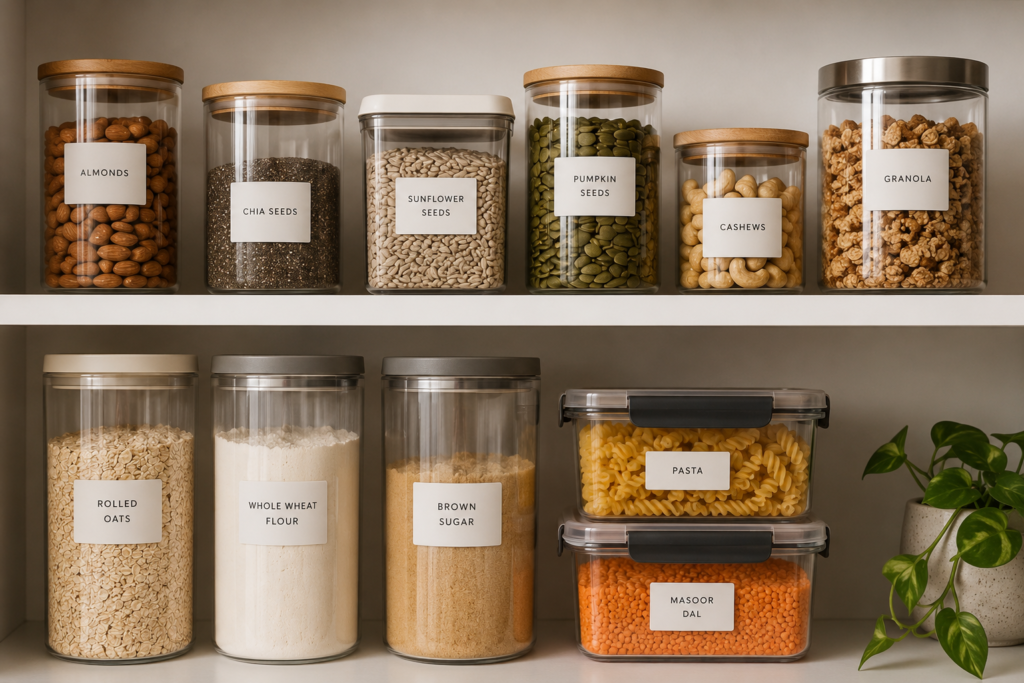
I’ve opened pantry cabinets where flour had absorbed moisture, spices had lost their aroma, and snack packets had turned soft, all because storage wasn’t planned well.
Before the rains become heavy:
- Check expiry dates.
- Transfer dry groceries into airtight containers.
- Wipe every shelf completely dry.
- Avoid storing open packets.
- Keep frequently used ingredients accessible so nothing gets forgotten at the back.
An organized pantry isn’t only beautiful. It also reduces food waste.
Wardrobes Need Attention Too
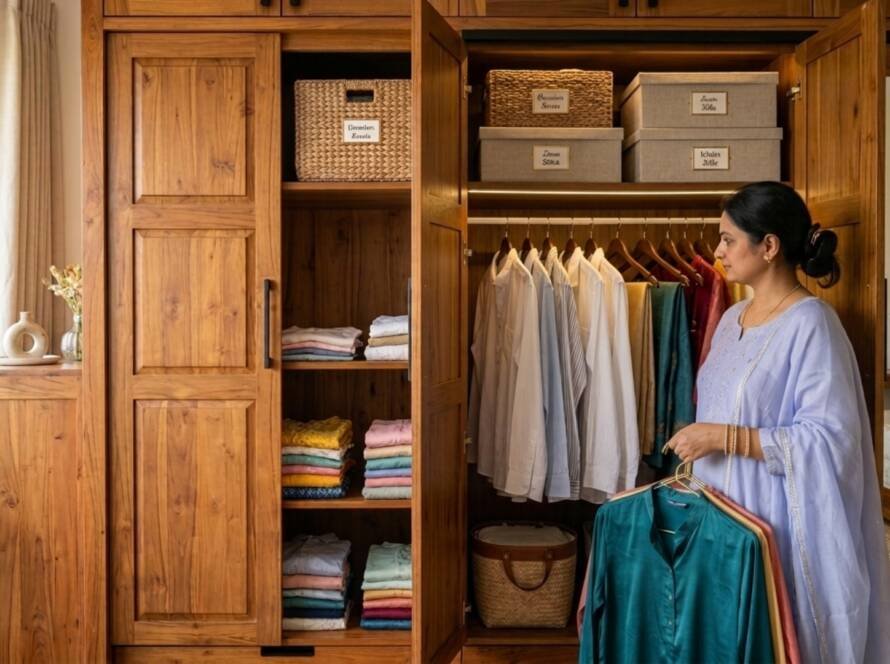
Many people blame the weather when clothes develop that familiar musty smell. Often, the real reason is overcrowding. Leave some space between hanging clothes. Avoid storing damp laundry “just for a while.”
Never keep recently ironed clothes if they still carry moisture from steam. Natural airflow inside wardrobes makes a remarkable difference throughout the season.
Create a Dry Zone Near Your Entrance
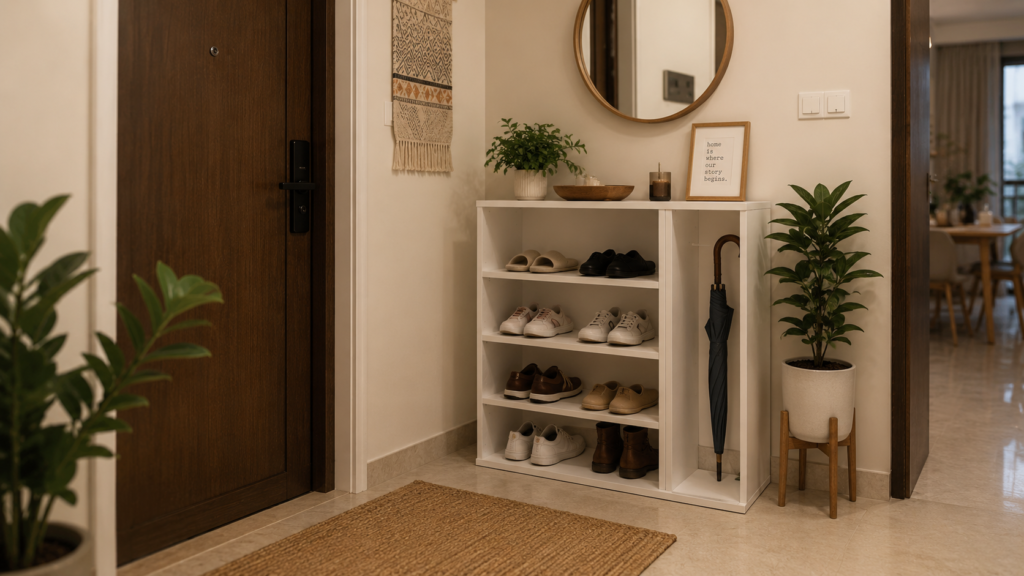
This is one of my favourite organizing systems because it solves multiple daily frustrations.
Instead of wet umbrellas travelling through the house, create one dedicated landing space near your entrance.
Include:
- An umbrella stand
- Hooks for raincoats
- A washable mat
- A tray for wet footwear
- A small basket for reusable shopping bags
Suddenly, the rain stays at the door instead of following you through the house.
Simple systems create calmer homes.
Paperwork Needs Protection Too
One category that people rarely think about is paperwork.
Important documents, certificates, warranties, passports, insurance papers, and photographs are surprisingly vulnerable during humid months. Store them inside waterproof document folders or archival boxes.
If possible, digitize important papers as an additional backup.
Protecting memories is just as important as organizing them.
Small Daily Habits Make the Biggest Difference
You don’t need an entire weekend to prepare your home. Sometimes five minutes each day is enough. Open cupboard doors whenever possible, Allow sunlight into rooms, Check hidden corners, Empty laundry baskets regularly, Wipe shelves before moisture settles.
Consistency always wins over occasional deep cleaning.
Organization Is Preventive Care
People often call a home organizer when clutter has become overwhelming.
But one of my favourite parts of this profession is helping people prevent problems before they happen. Monsoon reminds us that organization isn’t about making homes look perfect.
It’s about helping them function better. It’s about protecting what matters.
It’s about creating spaces that continue to support your everyday life, no matter what the weather brings. This season, instead of waiting for dampness, mold, or unpleasant smells to appear, prepare your home with thoughtful systems.
Because when your home is organized, it isn’t just easier to maintain. It becomes healthier, calmer, and more resilient.
And that, to me, is what living with intention truly looks like.
— Anjana
Founder, Aroha Home Organizing